
Texas recorded 18,834 large truck crashes in 2024, resulting in 645 fatal crashes and 712 deaths. That figure is not a coincidence — Texas accounts for approximately 25.7% of all truck crashes reported nationwide. No other state comes close.
These truck accident statistics reflect a hard reality for drivers across Central Texas, particularly in high-traffic areas like Austin, Round Rock, and San Marcos. Commercial vehicle accident cases carry consequences that extend far beyond property damage — victims and their families often face life-altering injuries, mounting medical bills, and an uphill battle against well-funded trucking company insurers.
At The Martinez Law Firm, we have seen firsthand what a big truck accident can do to a person's life and livelihood. This article examines why Texas consistently leads the nation in commercial truck accident statistics, identifies the most common causes of these crashes, and explains what every driver should know to protect their legal rights after a collision.
Texas operates the most extensive freight transportation network in the nation. The scale of that infrastructure, combined with the state's economic position and industry-specific traffic patterns, creates conditions that directly drive elevated truck accident injury rates across every region of the state.
Texas maintains over 675,000 miles of roadway — more than any other state in the country. That network supports more than 3.3 billion tons of freight annually, equating to 160 tons per resident and 5,500 tons per business. Texas has held the top ranking for exports for 16 consecutive years, and if it were an independent nation, it would rank as the 9th largest economy in the world. That level of economic activity pushes an enormous volume of commercial trucks onto Texas roads every single day, creating collision risk that compounds with every additional mile of freight movement.
Texas sits at the crossroads of major trade routes, making it the primary gateway for cross-border freight from Mexico. Consider what that means in practical terms:
Laredo handles more trade than any other inland port in the United States, with thousands of trucks crossing daily and spreading out onto Texas interstates
The Port of Corpus Christi and Houston's port complex push a constant stream of containers and fuel onto Texas roads
Dallas-Fort Worth distribution centers stage goods for national retailers, adding yet another layer of heavy truck traffic to already congested corridors
No other state absorbs this combination of border freight, port activity, and national distribution traffic simultaneously.
Certain interstates carry a disproportionate share of commercial vehicle accidents. The numbers tell a serious story:
Interstate 35 — stretching 400 miles from Laredo through San Antonio, Austin, and into Dallas-Fort Worth — recorded 290 fatalities over a five-year period
Interstate 20 — cutting through the Permian Basin oil region near Midland-Odessa — channels massive volumes of heavy trucks onto narrow rural highways
Interstates 10 and 45 complete a network of high-risk routes where Interstates, U.S. Highways, and State Highways together account for 87% of all fatal truck accidents in Texas
If you regularly drive any of these corridors, you are sharing the road with some of the highest concentrations of commercial truck traffic in the country.
The Permian Basin oil boom turned West Texas into one of the most dangerous driving environments in America. U.S. Route 285 earned the nickname "Death Highway" after 93 people were killed in truck accidents in the region. The Permian Basin alone generates an estimated 106,000 truck trips per day, moving more than 340 million tons of sand and water annually. Rural counties near oilfields show numbers that far exceed what their populations would suggest — accidents climbed 67% and commercial truck accidents surged 160% during the height of the oil boom.
Urban areas compound the problem in their own way. Harris County recorded 6,113 commercial motor vehicle crashes in a single year — nearly one in every six large truck accidents across the entire state. Houston alone sees more than 17 truck accidents every single day.
The numbers across other major counties reinforce just how widespread this problem is:
Dallas County: 3,871 truck crashes
Bexar County: 2,460 truck crashes
Tarrant County: 1,866 truck crashes
Dense populations, high-speed roadways, and major shipping hubs create conditions in these metropolitan areas where the risk of a serious commercial truck accident is never far away.
Knowing why these crashes happen is just as important as knowing where they happen. Driver behavior, regulatory violations, and roadway conditions all contribute to the state's elevated truck accident injury rates — and recognizing these factors could one day save your life.
Fatigue is a factor in approximately 13% of large truck crashes. A truck driver who has been behind the wheel for 16 or more consecutive hours experiences cognitive impairment comparable to a blood alcohol concentration of 0.08% — the legal limit for drunk driving.
Federal regulations cap driving time at 11 hours after 10 consecutive hours off duty, but deadline pressure from carriers pushes many drivers past these legal limits. When a fatigued driver loses focus at highway speed, the consequences for everyone nearby are catastrophic.
Speeding is the leading cause of fatal crashes involving large trucks, and the numbers behind this fact are striking:
Nearly 17% of commercial truck drivers in fatal crashes had at least one prior speeding violation
Loaded tractor-trailers require 20 to 40% more stopping distance than passenger vehicles
Certain stretches of I-10 and I-20 in West Texas carry speed limits of 80 mph
A fully loaded 18-wheeler traveling at those speeds cannot stop in time when something goes wrong ahead. The physics simply do not allow it.
Distracted driving claimed 3,208 lives in 2024. For truck drivers, the danger is especially pronounced:
Texting while driving makes a truck driver 23.2 times more likely to be involved in an accident
Dialing a hand-held device increases the probability of a crash by 600%
A texting truck driver takes their eyes off the road for an average of 4.6 seconds
At highway speed, 4.6 seconds is enough time to travel the length of a football field — completely blind.
Roughly 35% of all motor vehicle accidents occur at intersections, and these collisions are particularly lethal when a commercial truck is involved. Side impacts alone account for 26% of passenger vehicle occupant deaths. Recognition errors — including distraction and inadequate surveillance — contribute to 55.7% of intersection crashes. These are not random events. They are predictable failures that an attentive driver can often avoid.
Texas roads are constantly under construction, and those work zones carry serious risk. Work zone crashes killed 850 people in 2024, with large trucks involved in 31.5% of fatal work zone crashes. The problem is getting worse, not better — fatal work zone crashes where speeding was a contributing factor rose from 32% in 2021 to 34% in 2022.
When a commercial truck enters a compressed, reduced-speed work zone and the driver fails to adjust, the margin for error disappears entirely.
Commercial truck accident cases are not standard personal injury claims. They involve federal trucking regulations, multiple potentially liable parties — the driver, the trucking company, cargo loaders, and maintenance contractors — and insurance defense teams that respond to serious crashes within hours. Getting the right legal representation matters from day one.
We offer a free, zero-obligation consultation to review your commercial truck accident case. During this initial evaluation, we assess liability, identify every potential claim, and walk you through your legal options without any financial pressure. We work on a contingency fee basis, which means you pay nothing unless we recover compensation for you.
Personal injury law applies whenever one person or entity causes another person harm through intentional, negligent, or reckless behavior. Our practice covers vehicle accidents, premises liability claims, construction site accidents, and workplace injuries. With 28 years of experience, our firm brings a unique perspective — former municipal judge Arturo Martinez leads our team with deep knowledge of how Texas courts handle these cases.
This distinction is one that injured workers often overlook, and it can significantly affect the compensation they receive.
Workers' compensation provides no-fault benefits for medical care and partial wage replacement — but it does not cover pain and suffering. If a commercial truck driver caused your injury while you were working, you may have the right to pursue a third-party liability claim against parties outside your employer. That claim can include:
Full lost wages, not just a partial replacement
Compensation for pain and suffering
Future medical expenses and rehabilitation costs
Third-party claims consistently produce substantially higher recoveries than workers' compensation benefits alone. If you were injured in a truck accident while on the job, it is worth understanding both options before accepting anything.
Our office is located at 2101 S IH-35 Frontage Road, Suite 100, Austin, Texas. We serve clients throughout Travis, Williamson, Hays, Bastrop, Caldwell, and Burnet counties. Our bilingual staff is ready to assist communities from Round Rock and Pflugerville to San Marcos and Bastrop.
We have recovered millions for accident victims across Central Texas through seven-figure settlements and jury verdicts. If you or a loved one has been injured in a commercial truck accident, call us at (512) 444-0025 for immediate legal assistance.
The actions you take in the hours immediately following a commercial truck accident can make or break your truck accident injury claim. Physical evidence disappears fast, and trucking companies dispatch their own investigation teams within hours to build a defense. Here is what you need to do.
Photograph everything before anything is moved — vehicle positions, damage patterns, skid marks, debris, road conditions, traffic signals, and visible injuries. Take photos from multiple angles and distances.
Collect the truck driver's name, license number, insurance details, and company identification
Get contact information from every witness at the scene
Note the trucking company name displayed on the trailer
Modern commercial trucks contain black box data that records speed, braking, and engine performance in the seconds before impact. This information can be deleted. Surveillance footage from nearby businesses gets overwritten within days. The sooner your attorney acts to preserve this evidence, the stronger your claim will be.
Get a medical evaluation even if you feel fine. Life-threatening conditions — brain trauma, internal bleeding, and spinal damage — frequently show no immediate symptoms after a collision. If you delay treatment, insurance companies will argue your injuries were not caused by the accident. Medical records are the direct link between the crash and your injuries, and that link must be established quickly.
Trucking company insurers typically contact victims within days of the accident, offering a quick settlement before the full scope of your injuries becomes clear. It's crucial to understand what those early offers do not include:
Future medical expenses and ongoing rehabilitation
Lost earning capacity
Pain and suffering
Long-term complications that may emerge weeks or months later
Once you sign a release and accept a settlement, you forfeit all rights to additional compensation — even if your condition worsens. Do not accept any offer without first speaking with an attorney.
Call The Martinez Law Firm at (512) 444-0025 for a free case evaluation. We take immediate steps to protect your claim, including:
Sending spoliation letters that require all parties to preserve evidence
Accessing black box data that trucking companies guard closely
Handling all communications with insurance companies to prevent statements that could undermine your case
The sooner you reach out, the more options we have to pursue the compensation you deserve.
The numbers tell a sobering story — Texas roads carry more commercial truck traffic than any other state, and the consequences for accident victims can be severe and lasting. If you or someone you love has been injured in a commercial truck accident, the decisions you make in the days immediately following the crash will shape the outcome of your case.
At The Martinez Law Firm, we have spent 28 years fighting for accident victims across Central Texas. We understand the physical, emotional, and financial toll these crashes take on families, and we are committed to making sure our clients receive the compensation they deserve. Our attorneys handle every aspect of your case — from preserving critical evidence to negotiating with trucking company insurers — so you can focus on your recovery.
Don't wait. Call us today at (512) 444-0025 for a free case evaluation. There is no obligation and no upfront cost — we only get paid if we win your case.
Texas faces a critical truck accident crisis that every driver should understand. Here are the essential facts and actions that could protect your safety and legal rights:
• Texas dominates national truck crash statistics with 18,834 large truck crashes in 2024, accounting for 25.7% of all nationwide truck accidents due to its massive 675,000-mile highway network and position as America's top export state.
• High-risk corridors demand extra caution – I-35, I-10, I-20, and I-45 are particularly dangerous, with I-35 alone recording 290 fatalities over five years and Harris County experiencing 17 truck accidents daily.
• Driver fatigue and speeding are leading killers – truck drivers operating 16+ hours show impairment equal to 0.08% blood alcohol, while speeding causes the majority of fatal truck crashes and texting increases accident risk by 2,320%.
• Immediate action after an accident is critical – document everything with photos, seek medical attention even without visible injuries, reject early settlement offers, and contact an experienced truck accident attorney within hours to preserve vital evidence like black box data.
• Third-party liability claims offer substantially higher compensation than workers' compensation alone, covering full lost wages, pain and suffering, and future medical expenses that standard workers' comp excludes.
The stakes are too high to navigate alone. If you've been involved in a truck accident, understanding these factors and taking swift legal action can mean the difference between inadequate compensation and full recovery for your injuries and losses.
Q1. Why does Texas have so many truck accidents compared to other states? Texas has the highest number of truck accidents in the nation due to its massive 675,000-mile highway network (the largest in the U.S.), its position as the top export state for 16 consecutive years, and its role as a major trade hub handling over 3.3 billion tons of freight annually. The state's strategic location as a gateway for cross-border freight from Mexico, combined with oil industry traffic in West Texas and major metropolitan shipping centers, creates unprecedented commercial truck traffic density that no other state matches.
Q2. What are the most dangerous highways for truck accidents in Texas? The most dangerous corridors include Interstate 35 (which recorded 290 fatalities over five years), Interstate 10, Interstate 20 (passing through the Permian Basin oil region), and Interstate 45. Harris County alone experiences more than 17 truck accidents every day, with 6,113 commercial motor vehicle crashes annually. U.S. Route 285 in West Texas has earned the nickname "Death Highway" due to the high concentration of fatal truck accidents in the oil-producing region.
Q3. What should I do immediately after being involved in a truck accident? First, document the scene thoroughly by photographing vehicle positions, damage, skid marks, road conditions, and visible injuries from multiple angles. Collect contact information from all parties and witnesses. Seek medical attention immediately, even if you feel uninjured, as serious conditions like brain trauma or internal bleeding may not show immediate symptoms. Avoid accepting early settlement offers from insurance companies, and contact an experienced truck accident attorney as soon as possible to preserve critical evidence like black box data.
Q4. How does driver fatigue contribute to truck accidents? Driver fatigue plays a role in approximately 13% of large truck crashes. Truck drivers operating for 16 or more consecutive hours experience cognitive impairment comparable to a blood alcohol concentration of 0.08%. Despite federal regulations limiting drivers to 11 hours of driving after 10 consecutive hours off duty, violations persist when drivers face pressure to meet delivery deadlines, significantly increasing the risk of accidents.
Q5. What's the difference between workers' compensation and third-party liability claims after a truck accident? Workers' compensation provides no-fault benefits for medical care and partial wage replacement but doesn't cover pain and suffering. Third-party liability claims allow injured workers to pursue full compensation against parties outside their employer, including full lost wages, pain and suffering, and future medical expenses. Third-party claims typically provide substantially higher recovery than workers' compensation alone, making it important to explore all available legal options after a truck accident.
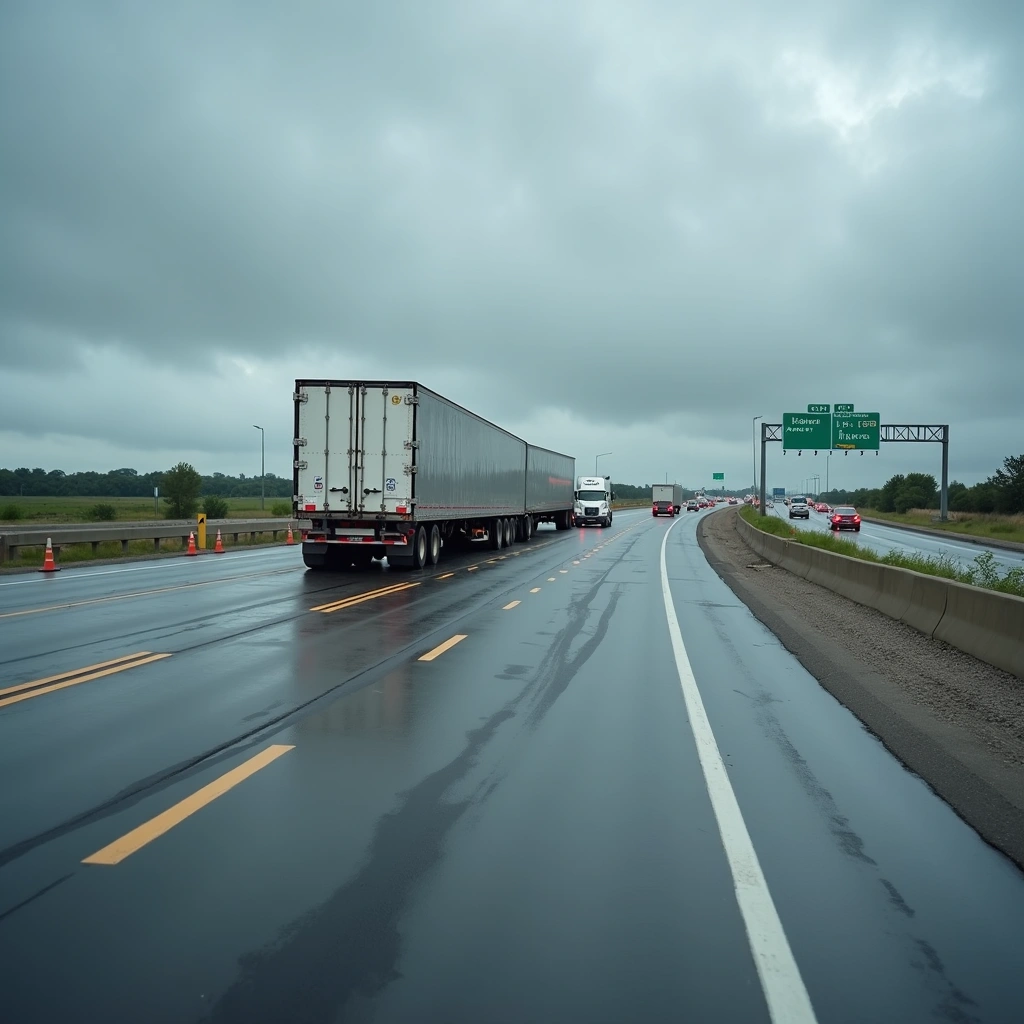
Tractor trailer jackknife accidents rank among the deadliest collisions on I-35. Data from 2023 shows that 4.4% of single-trailer semis and 7.1% of multi-trailer semis experienced jackknifing in fatal crashes. When a jackknifed semi swings across multiple lanes, other drivers have little to no time to react — and the consequences are often catastrophic. Knowing what causes a tractor-trailer to jackknife is essential for anyone who travels Central Texas highways regularly.
At The Martinez Law Firm, we've spent 28 years fighting for victims of these crashes. A trailer jackknife is likely to happen when brakes lock up, road conditions deteriorate, or mechanical failures go unaddressed. We're here to break down the real causes behind these accidents — and to explain how our team can pursue the full compensation you deserve after a life-changing collision.
Several factors contribute to tractor-trailer jackknife crashes on I-35, and understanding each one matters — both for road safety and for building a strong legal claim after an accident.
Sudden Braking This is the most common trigger. When a driver slams the brakes, the cab decelerates faster than the trailer, causing the trailer to swing sideways and fold into the jackknife position. Drivers who fail to maintain safe following distances or react too late to slowing traffic make this outcome far more likely.
Excessive Speed Speed dramatically increases the risk. A truck driver who exceeds the posted speed limit by just 10 miles per hour raises their chances of jackknifing by 49%. At highway speeds, the momentum of an 80,000-pound semi is difficult to control — particularly around curves or on downhill slopes where weight shifts uncontrollably.
Hazardous Weather Conditions Rain, ice, and snow are particularly dangerous on I-35. Rain alone increases jackknife risk by 3.22 times. Reduced tire traction makes it nearly impossible to maintain control during braking or steering, and drivers who fail to reduce their speed on wet roads put everyone around them at serious risk.
Improperly Loaded Cargo When cargo isn't loaded correctly — specifically, when 60 percent of the load isn't positioned toward the front of the trailer — the center of gravity shifts. Cargo that moves during transport makes the trailer unstable and prone to swinging during braking or turns.
Each of these causes points to a failure — whether by the driver, the trucking company, or another responsible party. That distinction becomes critical when determining who should be held accountable for your injuries.
Determining who caused your jackknife accident is rarely straightforward. Liability requires a thorough examination of every party involved in the truck's operation — and in most cases, more than one party shares responsibility for the crash.
The driver is often the starting point. Speeding, distracted driving, improper braking, and hours-of-service violations are all direct causes of a jackknifed semi. If the driver made choices that put your safety at risk, they can be held accountable.
Trucking companies face direct liability when they:
Fail to properly maintain their fleet
Hire unqualified or inadequately trained drivers
Pressure drivers to meet unrealistic deadlines
Under the legal doctrine of respondeat superior, employers are responsible for the negligent acts their drivers commit during work hours. This means both the driver and the company can be held accountable for the same crash.
When an unbalanced or unsecured load violates federal cargo securement standards under 49 CFR Part 393, the cargo loading company shares fault. Improperly distributed weight is a known trigger for trailer instability — and if a third party loaded that trailer negligently, they bear responsibility for what followed.
Third-party maintenance providers become liable when mechanical failures result from inadequate inspections or repairs they performed. Manufacturers face claims when defective brake systems or other component failures contributed directly to the jackknife.
Texas modified comparative fault rules allow you to recover damages as long as you are 50% or less responsible for the accident. Even if you share some degree of fault, you may still be entitled to significant compensation.
Proving these liability chains demands a thorough investigation — electronic logging device data, maintenance records, and driver logs all tell part of the story. We've recovered millions for Central Texas victims by identifying every responsible party and building cases that insurance companies simply cannot dismiss.
For over three decades, The Martinez Law Firm has helped Central Texas families rebuild their lives after devastating jackknife accidents. Our 98% success rate reflects the intensity we bring to every tractor trailer jackknife case. We've recovered millions for clients throughout Austin, Round Rock, Pflugerville, Cedar Park, Georgetown, Leander, Buda, Kyle, San Marcos, Bastrop, Elgin, West Lake Hills, Lakeway, and surrounding communities across Travis, Williamson, Hays, Bastrop, Caldwell, and Burnet counties.
Our founder, former municipal judge Arturo Martinez, brings a courtroom perspective that insurance companies take seriously. His "view from the bench" shapes both our negotiation strategies and our approach at trial — particularly when trucking companies refuse to offer fair settlements. Our fully bilingual staff serves the diverse Central Texas community in English and Spanish, so nothing gets lost in translation when it matters most.
Here's what you can expect when you work with us:
No upfront costs — we work on a contingency fee basis, meaning you pay nothing unless we win your claim
Immediate investigation — our team moves quickly to preserve black box data, maintenance records, and scene evidence before trucking companies have the opportunity to obscure the facts
Full accountability — we identify every liable party, from drivers to fleet owners to cargo loaders, and build cases that insurance companies cannot dismiss
Don't wait to get the help you need. Call us at (512) 444-0025 for a free case evaluation. Our office at 2101 S IH-35 Frontage Road, Suite 100, Austin, Texas 78741 is ready to fight for the compensation you deserve.
Jackknife accidents on I-35 can upend your life in a matter of seconds. The physical injuries, financial strain, and emotional toll that follow are real — and you shouldn't have to carry that burden alone.
At The Martinez Law Firm, we know how to build the case, identify every liable party, and fight for the compensation you and your family deserve. With a 98% success rate over 28 years, we've stood by Central Texas victims every step of the way — and we're ready to do the same for you.
Don't wait. Evidence disappears quickly in these cases, and time matters. Call us today at (512) 444-0025 for your free case evaluation. You pay nothing unless we win your maximum compensation for your claim. Let us handle the legal fight while you focus on healing.
Understanding the root causes of jackknife accidents on I-35 can help you stay safer and know your rights if tragedy strikes:
• Sudden braking and excessive speed are the primary triggers – Slamming brakes causes trailers to swing sideways, while speeds just 10 mph over the limit increase jackknife risk by 49%.
• Weather conditions dramatically amplify danger – Rain increases jackknife risk by 3.22 times, making wet road adjustments critical for preventing these catastrophic crashes.
• Multiple parties may share liability beyond the driver – Trucking companies, cargo loaders, and maintenance providers can all be held accountable under Texas law for their role in jackknife accidents.
• You have legal recourse even if partially at fault – Texas modified comparative fault rules allow recovery of damages as long as you're 50% or less responsible for the accident.
• Immediate legal action preserves critical evidence – Black box data, maintenance records, and scene evidence must be secured quickly before trucking companies can obscure facts that prove your case.
If you've been involved in a jackknife accident on I-35, acting quickly to protect your rights is essential. The Martinez Law Firm offers free case evaluations and works on contingency – you pay nothing unless they win your case.
Q1. What are the primary factors that lead to jackknife accidents involving tractor trailers? The most common causes include sudden braking that causes the trailer to swing sideways, excessive speed (even 10 mph over the limit increases risk by 49%), adverse weather conditions like rain which increases jackknife risk by 3.22 times, improperly loaded or unbalanced cargo, driver fatigue, and mechanical failures due to poor maintenance.
Q2. How does weather impact the likelihood of a jackknife accident? Weather conditions significantly increase jackknife risk. Rain creates slippery surfaces that multiply the risk by 3.22 times, while ice and snow further reduce tire traction. Wet roads make it nearly impossible for drivers to maintain control when steering or braking, especially if they fail to adjust their speed accordingly.
Q3. Can multiple parties be held responsible for a jackknife truck accident? Yes, liability often extends beyond just the truck driver. Trucking companies can be held accountable for inadequate maintenance or hiring unqualified drivers, cargo loading companies may share fault for improperly secured loads, third-party maintenance providers can be liable for mechanical failures, and manufacturers may face claims for defective parts like brake systems.
Q4. What percentage of semi-trucks experience jackknifing in fatal crashes? According to 2023 data, 4.4% of single-trailer semis and 7.1% of multi-trailer semis experienced jackknifing in fatal crashes, making it one of the most serious threats on highways.
Q5. Can I still recover damages if I was partially at fault for a jackknife accident? Yes, under Texas modified comparative fault rules, you can recover damages as long as you are 50% or less responsible for the accident. This means even if you share some fault, you may still be entitled to compensation for your injuries and losses.
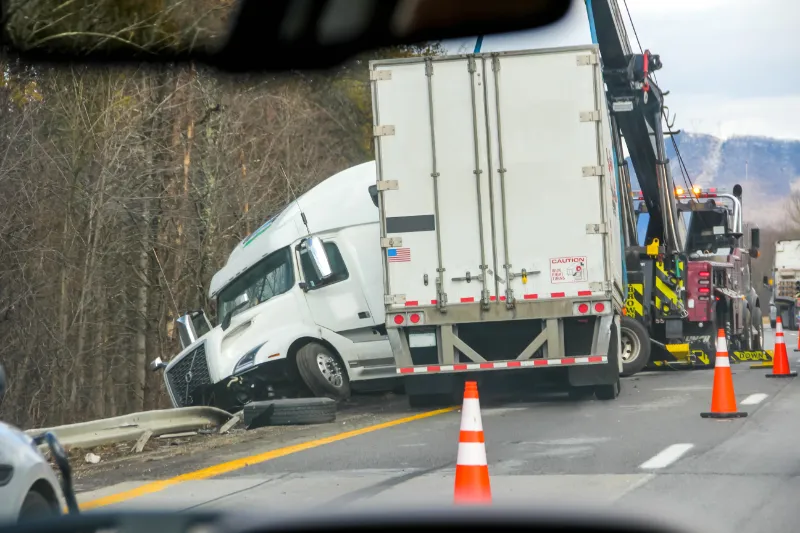
The sight of an 80,000-pound semi-truck jackknifing across multiple lanes of traffic strikes fear in any driver who witnesses it. These accidents unfold in seconds but leave lasting physical and emotional scars for everyone involved.
At The Martinez Law Firm, we regularly represent victims of jackknife truck accidents on Texas highways. These devastating crashes occur when a truck's trailer swings sideways at a 90-degree angle from the cab, resembling a folding pocket knife. The massive trailer often blocks several lanes, creating hazardous conditions for nearby vehicles.
Our experience handling these cases has shown that while multiple factors contribute to jackknife accidents, understanding the key causes can help prevent catastrophic outcomes. This guide examines actual jackknife accident cases we've handled, breaks down the most common triggers for these crashes, and outlines proven strategies to avoid them. For truck drivers and motorists alike, this knowledge could mean the difference between reaching their destination safely and becoming part of these sobering statistics.
At The Martinez Law Firm, we see the devastating impact of jackknife truck accidents on families across Texas. As experienced injury lawyers in Austin, we understand both the physics behind these crashes and their life-altering consequences.
A jackknife accident happens when a truck's trailer swings sideways, forming a 90-degree angle with the cab - much like a closing pocket knife. Federal Motor Carrier Safety Administration (FMCSA) data reveals the gravity of these incidents: 169 fatal crashes and roughly 1,000 injury crashes occurred in 2020.
Our years handling these cases have revealed several key factors that lead to jackknifing:
Through our work with truck accident victims, we've identified these common risk patterns:
The FMCSA confirms our observations - 24% of fatal truck crashes stem from loss of vehicle control.
These accidents rarely affect just one vehicle. Multiple-vehicle collisions frequently follow jackknife incidents. FMCSA data shows that 74% of fatal truck crashes begin with collision with another vehicle.
Our experience representing clients throughout Austin, Buda, Kyle, and surrounding areas has shown the true human cost behind these statistics. Consider this: 63% of trucks in fatal crashes encountered another vehicle, person, or object in their travel lane. For Texas drivers, understanding these risks isn't just about statistics - it's about making it home safely to their families.
The Martinez Law Firm has handled countless jackknife truck accidents where Texas weather turned routine trips into tragedies. These cases reveal how quickly road conditions can create dangerous situations for both truck drivers and motorists.
Black ice claimed three lives last winter when a fully loaded semi jackknifed across I-35 near Austin. The truck driver, a 15-year veteran, had no time to correct the trailer's swing before it blocked all southbound lanes. Federal data backs up what we witnessed - adverse weather makes jackknife accidents three times more likely. Curved roads double that risk.
A 20-year trucking veteran who survived a jackknife incident shared critical safety practices:
Our analysis of recent accidents reveals troubling patterns:
As personal injury lawyers serving Austin, Buda, Kyle and surrounding communities, we've seen how these statistics translate to shattered lives. While jackknife accidents make up just 5% of truck crashes, they cause 10% of truck-related deaths.
Most alarming: exceeding the speed limit by just 10 mph raises jackknife risk by 49%. For Texas families, these aren't just numbers - they're reminders that one moment of excessive speed can lead to irreversible tragedy.
The Martinez Law Firm's work with truck accident cases reveals a stark truth: human decisions and limitations often determine whether a truck jackknifes. These factors create a complex web of risks on Texas highways.
Fatigue kills. Our case files show exhausted drivers making fatal mistakes in split-second situations. Studies confirm this danger - 13% of truck drivers involved in accidents were fighting fatigue. The warning signs emerge long before an accident:
The National Sleep Foundation's data paints a grim picture: drowsy driving causes roughly 100,000 crashes yearly, many involving semi-trucks.
A Virginia Tech study confirmed what we've long observed - experience matters more than age in preventing accidents. Our cases show new drivers struggling with:
| Critical Skill | Safety Risk |
|---|---|
| Brake Control | Panic stops trigger jackknifing |
| Load Management | Poor weight balance causes sway |
| Emergency Skills | Slow responses lead to crashes |
Trucking companies often value speed over safety. We've represented drivers forced to choose between rest breaks and delivery deadlines. Industry studies show 10% of drivers face intense pressure from carriers.
The results are predictable:
At The Martinez Law Firm, we see how unrealistic schedules force drivers into impossible choices. Many split required rest periods or drive straight through, dramatically raising jackknife risks. Our work throughout Austin, Buda, Kyle and surrounding areas exposes how corporate pressure turns Texas highways into danger zones.
The Martinez Law Firm's experience with jackknife truck accidents reveals the complex web of liability that follows these crashes. Each case demands careful investigation to identify all responsible parties and secure fair compensation for victims.
Jackknife accidents rarely have a single cause. Our investigations often uncover multiple liable parties:
| Party | Common Liability Issues |
|---|---|
| Truck Driver | Speeding, logbook violations |
| Trucking Company | Skipped maintenance, poor training |
| Loading Teams | Unsafe cargo distribution |
| Parts Makers | Failed components |
| Service Centers | Faulty repairs |
Building a strong case requires gathering key evidence:
Trucking companies maintain higher insurance limits than individual drivers. This difference matters - serious injuries often exceed personal policy limits. Our firm pursues all available coverage sources, including claims against multiple responsible parties.
The law allows victims to seek compensation from every negligent party. Trucking companies bear responsibility for their drivers' actions through vicarious liability. This legal principle helps ensure victims receive full compensation for their losses.
Winning a jackknife accident claim requires proving four key elements:
The Martinez Law Firm fights for accident victims throughout Austin, Buda, Kyle and surrounding areas. Call us at (512) 444-0025 for a free case review. Let our experience guide you through the complex legal process and help secure the compensation you deserve.
The Martinez Law Firm's case files tell a clear story: knowing how to share the road with semi-trucks saves lives. Our work with jackknife accident victims has taught us crucial safety lessons every Texas driver should know.
Space means survival. Semi-trucks need two football fields to stop safely. Remember this rule: if you can't see the driver's face in their mirror, they can't see you.
Key safety practices that protect you and your family:
Our accident investigations reveal clear danger signals:
| Warning Sign | Life-Saving Action |
|---|---|
| Swaying Trailer | Back Off Immediately |
| Erratic Movement | Change Lanes if Safe |
| Traction Loss | Ready Escape Route |
| Sudden Angles | Call 911 |
If you spot a truck starting to jackknife:
Smart drivers also:
Remember: trucks outweigh cars by 20-30 times. This mass changes everything about how they move and stop. Strong crosswinds from passing trucks can push your vehicle - grip your steering wheel firmly but don't overreact.
The Martinez Law Firm helps accident victims throughout Austin, Buda, Kyle, Bastrop, San Marcos, Pflugerville, and Round Rock. After any truck accident, call (512) 444-0025 for a free case review.
Jackknife truck accidents shatter lives on Texas highways every year. At The Martinez Law Firm, each case we handle reminds us how quickly these crashes change families forever. Yet we've also seen how knowledge and preparation save lives.
The reality of jackknife accidents demands attention from everyone sharing our roads. Car drivers must stay alert to weather risks, maintain safe distances, and recognize warning signs. Truck drivers and companies bear equal responsibility - proper maintenance, adequate rest, and smart speed choices prevent tragedies.
But safety knowledge alone isn't enough. When accidents happen, victims need strong legal protection to rebuild their lives. The Martinez Law Firm fights for accident victims, ensuring they receive fair compensation for medical bills, lost wages, and pain and suffering. Our deep understanding of truck accident cases helps clients focus on healing while we handle insurance companies and legal complexities.
Every Texas driver deserves to reach home safely. Whether you're steering an 18-wheeler or sharing the highway in your family car, remember that safety starts with you. When accidents happen, The Martinez Law Firm stands ready to help victims throughout Austin, Buda, Kyle, Bastrop, San Marcos, Pflugerville, and Round Rock.
Don't face the aftermath of a truck accident alone. Call us at (512) 444-0025 for a free case evaluation. Let our experience guide you toward the compensation and justice you deserve.
Q1. What is the primary cause of jackknife truck accidents?
The most common cause of jackknife accidents is sudden braking, especially on slippery roads. Poor brake adjustment, improper cargo distribution, and high speeds combined with sharp curves can also lead to jackknifing.
Q2. How can drivers stay safe around large trucks to prevent jackknife accidents?
Maintain a safe following distance of 4-5 car lengths, avoid lingering in blind spots, signal clearly when changing lanes, and never cut off a truck. Also, be aware of a truck's extended stopping distance and turn off bright lights when following or passing at night.
Q3. What are the warning signs that a truck might jackknife?
Watch for trailer swing, unusual trailer movement, loss of traction, and sharp angle changes. If you notice these signs, increase your following distance, change lanes safely if possible, and be prepared for evasive action.
Q4. How does driver fatigue contribute to jackknife accidents?
Driver fatigue significantly increases the risk of jackknife accidents. It can lead to delayed reaction times, poor judgment in emergency situations, reduced alertness, and impaired decision-making abilities. Studies show that about 13% of truck drivers were fatigued at the time of their accidents.
Q5. What should you do if you witness a truck beginning to jackknife?
Stay calm and assess your surroundings. Gradually reduce your speed without sudden braking, look for an escape route (preferably to the left side), and maintain steering control without overcorrecting. Avoid sudden movements or lane changes, and move to the shoulder when it's safe to do so.




Schedule a free consultation with one of our experienced lawyers today by filling out the form below, or call us at 512-444-0025