
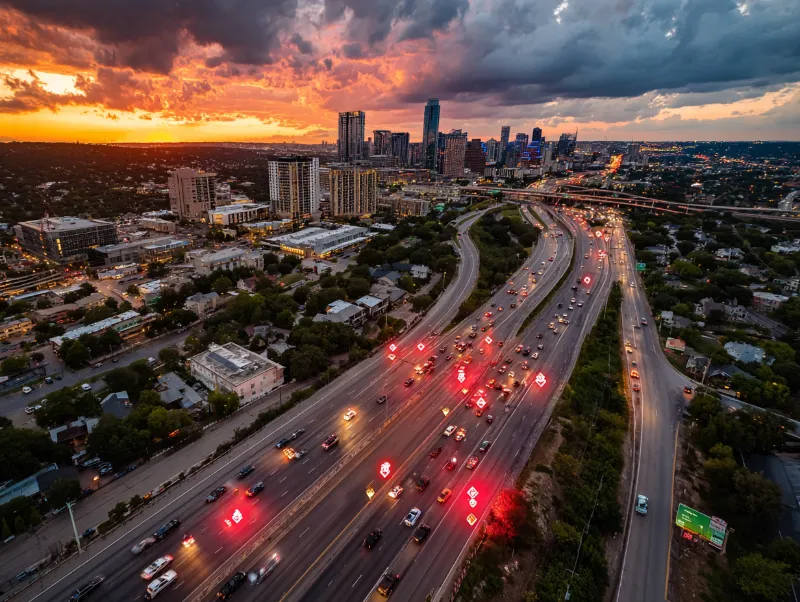
Austin drivers face a deadly reality on our city's roads. The most dangerous parts of Austin claimed 60 lives by September 2023 alone. Every time you get behind the wheel, you're 39.2 percent more likely to be involved in an accident compared to drivers elsewhere in the country. The numbers tell a sobering story—2022 brought 122 traffic fatalities to Austin streets, a sharp increase from the 88 deaths recorded in 2019 before the pandemic.
The risks extend far beyond vehicle occupants. More than 56% of all pedestrian crashes occur at intersections throughout our city. Dangerous intersections like 6th Street at Congress Avenue and San Antonio Street at Cesar Chavez Street have become notorious for their accident rates. Some intersections recorded over 68 incidents between 2012 and 2015, leaving 52 people injured. Pedestrians account for approximately one-third of all motor vehicle fatalities in Austin.
At The Martinez Law Firm, we understand the physical, emotional, and financial toll that these accidents can take on victims and their families. We've seen the devastating impact of Austin's most hazardous intersections firsthand through our work with injured clients throughout the city and surrounding communities. This guide will identify the most dangerous locations in Austin for 2025, examine why these areas pose such significant risks, and explain the steps you can take to protect yourself and your loved ones on our roads.
Several intersections throughout Austin have emerged as particularly hazardous locations where serious accidents occur with alarming frequency. Our experience at The Martinez Law Firm has revealed disturbing patterns of collisions at these key locations.
I-35 and Riverside Drive
This intersection remains one of the deadliest in Austin, where high-speed highway traffic collides with local drivers attempting to manage complex entrance and exit ramps. The combination of speed differentials and confusing traffic patterns creates a dangerous environment for all motorists.
Lamar Boulevard and Parmer Lane
Heavy traffic volumes combined with poor visibility make this intersection a recipe for serious accidents. Drivers often struggle to see oncoming traffic, particularly during peak hours when congestion compounds the visibility issues.
North Lamar at Rundberg Lane
This location becomes especially treacherous during rush hours when impatient drivers make dangerous lane changes. The intersection's design encourages aggressive driving behaviors that frequently result in serious collisions.
William Cannon Drive at Menchaca Road
This intersection continues to see an alarming number of T-bone collisions from drivers running red lights. The high-speed approach to this intersection often leaves drivers insufficient time to stop safely.
Guadalupe Street near University of Texas Campus
Pedestrians face extreme danger at this location, where heavy student foot traffic intersects with distracted drivers unfamiliar with the area. The combination of young pedestrians and distracted motorists creates a particularly volatile situation.
We've represented numerous clients injured at these specific locations. Our team understands the unique hazards each intersection presents, which allows us to build stronger cases for victims seeking compensation. If you've been injured at any of these dangerous locations, call us at (512) 444-0025 for a free case evaluation.
Multiple critical factors contribute to the deadly nature of Austin's most hazardous intersections. Understanding these causes helps explain why certain locations consistently see severe accidents and fatalities.
Austin's city planning historically prioritized vehicle speed over pedestrian safety, creating wide lanes and long blocks with insufficient crossing opportunities. This design philosophy from decades past continues to endanger lives today.
The statistics reveal disturbing patterns at signalized intersections:
30% of all crashes and 37% of serious or fatal crashes occur at signalized intersections
Left-turning vehicles colliding with oncoming traffic caused 171 serious injuries or fatalities between 2019 and 2023, accounting for over 12% of all severe non-freeway crashes
Many hazardous intersections cluster around I-35, where drivers transitioning from highway speeds often enter an "autopilot mode" or become distracted. This behavioral shift proves lethal—64% of pedestrian fatalities occur on roads with speed limits of 45mph or higher.
When and where accidents occur reveals additional danger patterns:
80% of pedestrian fatalities happen during nighttime or early morning/late evening hours
While 56% of pedestrian crashes occur at intersections, mid-block locations account for 75% of pedestrian fatalities
At The Martinez Law Firm, we've seen how these design flaws and driver behaviors create perfect storms for catastrophic accidents. Our experience handling cases from these dangerous locations gives us unique insight into establishing liability and securing compensation for victims throughout Austin and surrounding communities.
Austin has responded to this growing safety crisis with several key initiatives designed to address the most dangerous parts of our city. The Vision Zero program leads these efforts, targeting the complete elimination of traffic deaths and serious injuries through systematic safety improvements.
The city has secured significant funding to support these critical improvements:
Federal Grant Funding: Austin received USD 33.70 million from the federal Safe Streets and Roads for All grant program
Targeted Infrastructure Projects: These funds support five protected intersections and one roundabout specifically designed to address historical crash patterns
Advanced Traffic Management System: The city now monitors over 1,100 signalized intersections throughout Austin
Austin has pioneered innovative approaches to intersection safety. The city's traffic management system uses GPS technology rather than traditional road-based sensors to control signal lights. This advancement allows for more responsive and efficient traffic flow management.
Some of the most effective safety measures have required minimal investment. Austin has installed more than 640 leading pedestrian interval crossings since June, giving pedestrians a head start at intersections before vehicles receive the green light. Research demonstrates these treatments reduce pedestrian-vehicle crashes by 13%.
We closely monitor these safety improvements as they can significantly impact liability in personal injury cases. When cities make infrastructure changes, it often affects how courts determine fault in accident claims. If you've been injured at one of Austin's dangerous intersections, contact The Martinez Law Firm at (512) 444-0025 for a free case evaluation. Our understanding of these safety measures helps us build stronger cases for our clients.
Austin's dangerous intersections demand constant vigilance from every driver and pedestrian who travels our city's roads. The evidence is clear—from I-35 and Riverside Drive to Lamar Boulevard and Parmer Lane, these high-risk locations continue to claim lives and cause serious injuries due to poor city planning, inadequate pedestrian infrastructure, and dangerous driver behaviors.
While Austin's Vision Zero program and advanced traffic management systems offer hope for safer roads ahead, the reality remains sobering. Until these critical safety improvements take full effect, extreme caution is essential when traveling through these hazardous areas.
The devastating impact of these dangerous intersections affects real families every day. At The Martinez Law Firm, we witness this impact firsthand through our work with accident victims throughout Austin, Buda, Kyle, Bastrop, San Marcos, Pflugerville, and Round Rock. We understand exactly how these specific locations create liability issues in personal injury cases and how to hold responsible parties accountable.
Don't face the aftermath of a serious intersection accident alone. Our experienced personal injury attorneys will fight for your rights and pursue the compensation you deserve while you focus on recovery. Contact us today at (512) 444-0025 for a free case evaluation. Your safety matters on the road—and your rights matter in the legal process that follows an accident.
Austin drivers face alarming safety risks with specific intersections posing critical dangers that require immediate awareness and caution.
• Austin drivers are 39% more likely to crash than the national average, with 122 traffic fatalities recorded in 2022 alone • I-35 intersections with Riverside Drive and Parmer Lane are among the deadliest due to high-speed highway merging chaos • Over 56% of pedestrian crashes occur at intersections, with 64% of fatalities happening on roads with 45+ mph speed limits • Left-turning vehicles cause 12% of all severe crashes, making protected turns and extra caution essential at major intersections • Austin's Vision Zero program and $33.7 million in federal safety grants are funding intersection redesigns and smart signal systems
The most dangerous intersections cluster around I-35 where highway speeds meet local traffic, creating perfect storms for catastrophic accidents. While the city implements safety improvements through advanced traffic management and pedestrian interval crossings, drivers must remain vigilant at these high-risk locations until comprehensive redesigns are complete.
Q1. What are the most dangerous intersections in Austin for 2025? Some of the most hazardous intersections include I-35 and Riverside Drive, Lamar Boulevard and Parmer Lane, North Lamar at Rundberg Lane, William Cannon Drive at Menchaca Road, and Guadalupe Street near the University of Texas campus. These locations combine factors like high traffic volume, poor visibility, and complex traffic patterns.
Q2. Why are Austin's intersections so dangerous? Austin's intersections are dangerous due to several factors, including historical city planning that prioritized vehicle speed, insufficient pedestrian infrastructure, high-speed transitions from highways, and driver behaviors like distraction and aggressive driving. Additionally, timing plays a role, with most pedestrian fatalities occurring during nighttime or early morning/late evening hours.
Q3. How does Austin compare to the national average for traffic accidents? Austin drivers face a significantly higher risk of accidents compared to the national average. They are 39.2 percent more likely to be involved in an accident than drivers in other parts of the country, highlighting the city's ongoing road safety challenges.
Q4. What is Austin doing to improve road safety? Austin is implementing several initiatives to enhance road safety, including the Vision Zero program aimed at eliminating traffic deaths and serious injuries. The city has secured federal funding for safety projects, is implementing an Advanced Traffic Management System, and has installed leading pedestrian interval crossings at numerous intersections to reduce pedestrian-vehicle crashes.
Q5. When are the most dangerous times to drive in Austin? The most dangerous times to drive in Austin are typically during rush hours (7-9 AM and 4-6 PM) when traffic congestion is at its peak. Additionally, nighttime and early morning/late evening hours pose increased risks, especially for pedestrians. Major events like South by Southwest (SXSW) can also contribute to heightened traffic dangers due to increased congestion and unfamiliar drivers in the area.




Schedule a free consultation with one of our experienced lawyers today by filling out the form below, or call us at 512-444-0025