
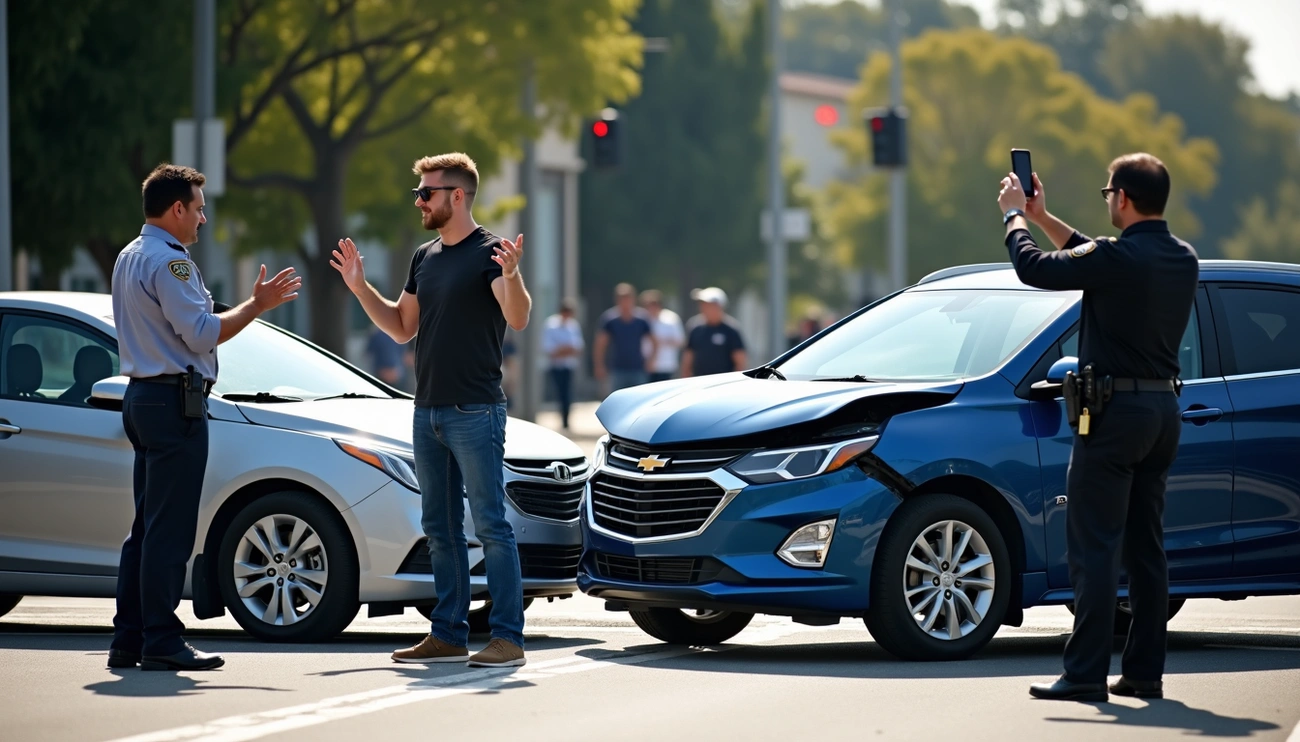
Insurance fraud costs a staggering $308.6 billion annually, and when an at-fault driver lies to insurance companies after an accident, they contribute to this massive problem. What appears to be a simple white lie can spiral into devastating consequences that affect everyone involved.
Lying to insurance companies about an accident creates immediate and serious repercussions. Claim denial happens quickly, premiums skyrocket, and criminal charges become a real possibility. Nevada prosecutes intentional misrepresentation in insurance claims with severe penalties, while Pennsylvania treats insurance fraud as a felony punishable by up to 7 years in prison and a $15,000 fine.
When the other driver lies after an accident, the impact on your case can be significant. Fault determination gets shifted, insurance decisions face delays, and your claim may be denied entirely. At The Martinez Law Firm, we see firsthand how frustrating and overwhelming this situation becomes for accident victims.
This article reveals what really happens when at-fault drivers lie to insurance companies and outlines the essential steps you need to take to protect yourself when facing dishonesty after an accident. We'll help you understand the tactics used against you and the legal options available to secure the compensation you deserve.
Accident scenes often become battlegrounds where truth faces immediate attack. Drivers lie for multiple reasons – avoiding higher insurance premiums, preventing license suspension, or simply escaping accountability. These dishonest statements shift blame to innocent victims and create significant obstacles in your claim process.
The most frequent deception involves outright denial of negligent actions. At-fault drivers refuse to admit dangerous behaviors that caused the accident:
Distracted Driving Denial: Claiming they weren't texting, talking on the phone, or using electronic devices
Speed Violations: Insisting they were driving at safe speeds when they were actually speeding
Following Too Closely: Denying tailgating or aggressive driving behaviors
Traffic Law Violations: Refusing to acknowledge running red lights, failing to yield, or other infractions
Instead of acknowledging their reckless driving, these individuals present themselves as careful, responsible motorists. This creates immediate barriers for victims seeking fair compensation.
Another common tactic involves fabricating mechanical problems or environmental factors:
Brake Failure Claims: Falsely asserting their brakes suddenly malfunctioned
Steering Problems: Claiming unexpected steering issues caused the collision
Accelerator Malfunctions: Alleging their gas pedal stuck or accelerator failed
Road Condition Blame: Attributing the accident to weather, poor road maintenance, or visibility issues
These fabrications attempt to shift responsibility from driver error to circumstances supposedly beyond their control.
Some at-fault drivers manipulate the sequence of events to avoid liability:
Traffic Signal Lies: Claiming they had a green light when they actually ran a red
Braking Timeline Changes: Altering when they applied brakes or took evasive action
Vehicle Position Misrepresentation: Changing their story about where their vehicle was positioned
Right-of-Way Fabrications: A driver making an unsafe left turn might falsely claim they had a green arrow, blaming you for allegedly speeding through the intersection
Perhaps the most frustrating scenario occurs when at-fault drivers directly blame you for the accident. Common false accusations include:
Speed Violations: Claiming you were speeding when you were following traffic laws
Improper Lane Changes: Alleging unsafe lane changes or merging violations
Traffic Law Violations: Accusing you of running signals, failing to yield, or other infractions
Distracted Driving Claims: Suggesting you were texting, talking, or otherwise distracted
These false accusations appear in police reports, insurance statements, and social media posts. Without proper evidence to counter these claims, you may find yourself unfairly labeled as responsible for a crash you didn't cause.
Understanding these deceptive tactics helps you prepare for what may follow an accident. Recognizing these patterns becomes your first step toward effectively defending yourself against false claims that threaten your right to fair compensation.
False statements after an accident trigger a chain reaction of serious consequences that affect everyone involved. Victims of dishonest drivers face significant challenges, while those who commit insurance fraud expose themselves to substantial legal and financial risks.
Insurance companies act quickly when they detect inconsistencies in accident reports, immediately flagging claims for extended review. Minor discrepancies between your statement and police reports can trigger suspicion, resulting in prolonged investigation periods and delayed payments. Insurance adjusters receive specific training to identify red flags, causing legitimate claims to face delays while they investigate potentially fraudulent submissions. If an at-fault driver falsely accuses you of causing the accident, your claim faces outright denial despite your innocence.
The financial burden of insurance fraud reaches far beyond individual cases. Americans pay approximately $308.60 billion annually to cover insurance fraud costs, which translates to about $932.63 for every person or nearly $3,800 for a family of four. Insurance companies transfer these expenses directly to consumers through higher premiums. If you're caught providing false information, insurers may immediately cancel your policy or place you in high-risk categories with substantially higher rates.
Lying to insurance companies carries serious legal consequences that can include:
Class 5 Felony charges in many states, punishable by up to 3 years in prison and $100,000 in fines
Class 1 Misdemeanor charges for providing false information on applications or renewals, with penalties of up to 18 months in jail and $5,000 in fines
Restitution payments that courts often order at double the original fraud amount
The legal system doesn't require insurers to prove they relied on your false statements to deny your claim—the mere act of misrepresentation provides sufficient grounds for denial.
The most lasting damage comes from destroyed credibility. Once labeled as potentially dishonest, you'll face heightened scrutiny on all future claims. This stigma persists for years, affecting your ability to secure affordable coverage. Insurance companies share information across the industry, making it nearly impossible to escape your history by switching providers. This reputation damage follows you into courtrooms and future insurance dealings.
We understand the complexities of these situations and how false claims can devastate your case. At The Martinez Law Firm, we've seen how dishonest drivers can turn a straightforward claim into a prolonged legal battle.
Your protection starts the moment you suspect dishonesty after an accident. The actions you take immediately can determine whether you receive fair compensation or face a denied claim.
Always call 911 after any crash, regardless of how minor it appears. Police reports provide neutral documentation that insurance adjusters and courts rely on as their primary source of information. Responding officers interview each driver separately, evaluate vehicle damage, document road conditions, and issue citations when appropriate.
This official documentation becomes your strongest defense against false claims. Request the report number from the officer so you can obtain a copy within 3-10 business days once it becomes available.
Witness testimony offers unbiased perspectives that can validate your version of events. Approach potential witnesses calmly and ask open-ended questions such as "What did you see happen?"
Record their complete information:
Full names and phone numbers
Relationship to the incident
Detailed, factual statements about what they observed
Memory fades quickly, so gather this information while the details remain fresh. These accounts often clarify disputed facts about accident conditions, driver behavior, and the sequence of events.
Visual evidence can expose false claims more effectively than any testimony. Capture the overall accident scene to show weather and road conditions, then take detailed photos of vehicle damage from multiple angles.
Your documentation should include:
Traffic signals and road signs
Skid marks and debris
Vehicle positions
Any visible injuries
These images help investigators determine impact angles and verify what actually happened during the collision.
Exercise restraint and avoid any discussion about who caused the accident. Even saying "I'm sorry" can be misinterpreted as an admission of guilt. Focus only on exchanging essential information like contact details and insurance information.
This protective measure prevents your statements from being taken out of context and used against you later in the claims process.
Contact your insurance company right after the accident, even if you believe you're not at fault. Prompt reporting is essential because delays can complicate your claim or give insurers grounds for denial.
Provide factual information without speculation, and mention if you suspect the other driver may be misrepresenting the facts. At The Martinez Law Firm, we can help you handle this process effectively—call us at (512) 444-0025 for a free case evaluation.
When facing dishonest drivers who lie to insurance companies, experienced legal representation becomes essential. At The Martinez Law Firm, we understand the complexities of insurance fraud cases and have developed proven strategies to counter false claims and secure the compensation you deserve.
We recognize the stress and uncertainty that comes with dealing with dishonest drivers. That's why we offer completely free case evaluations to help you understand your legal options without any financial pressure.
No Upfront Costs - Contact us at 512-444-0025 or online to discuss your situation
No Risk to You - You owe us nothing unless you win your case
24/7 Availability - Our team remains available around the clock to address your concerns
This approach ensures you never have to face these challenges alone, regardless of your financial situation.
With over 30 years of experience and a remarkable 98% success rate, our firm has built extensive knowledge across various accident scenarios. Mr. Martinez has established a courtroom success record spanning more than two and a half decades, handling:
Car accidents involving false liability claims
Truck collisions with complex insurance issues
Motorcycle crashes where fault is disputed
Workplace injuries with contested circumstances
This specialized knowledge allows us to anticipate and effectively counter the deception tactics commonly employed by at-fault drivers and their insurance companies.
Our thorough investigative approach sets us apart when fighting false insurance claims. Once you partner with us, we meticulously review every detail of your accident, examining:
Witness statements and contact information
Police reports and official documentation
Photographs and videos from the scene
Physical vehicle damage analysis
When necessary, we consult expert witnesses who can reconstruct your accident to demonstrate exactly what happened. This comprehensive approach effectively exposes inconsistencies in the other driver's story and strengthens your case.
Our firm proudly serves accident victims throughout central Texas, including Austin and surrounding communities. We understand the local roads, courts, and insurance practices - knowledge that proves invaluable when combating false claims in these jurisdictions.
Unlike facing insurance companies alone, our representation provides you with three essential elements: proof of responsibility, documentation of damages, and experienced advocacy when insurers attempt to compromise your rights. We use our passion, knowledge, and experience to secure the best possible settlement or verdict, ensuring you receive fair compensation even when confronting dishonest drivers and their misleading tactics.
At-fault drivers who lie about accidents create significant challenges for innocent victims seeking fair compensation. These deceptive tactics—from denying responsibility to falsely blaming you for the crash—can derail your insurance claim and leave you fighting an uphill battle.
The financial and legal consequences of insurance fraud extend far beyond the initial accident. Claim denials, delayed settlements, increased premiums, and policy cancellations become real threats when dishonest drivers manipulate the facts. Taking the right protective steps immediately after an accident can make the difference between a successful claim and a denied one.
Police reports, witness statements, photographic evidence, and prompt insurance reporting create the foundation for countering false claims. However, facing insurance companies and dishonest drivers without experienced legal representation puts you at a serious disadvantage.
At The Martinez Law Firm, we understand the physical, emotional, and financial toll that dishonest drivers can inflict on accident victims. We have successfully handled cases where at-fault drivers attempted to shift blame, and we know how to expose inconsistencies in their stories. Our approach combines thorough investigation with aggressive advocacy to ensure you receive the compensation you deserve.
Don't let a lying driver compromise your recovery. Contact The Martinez Law Firm today at (512) 444-0025 for a free case evaluation. We serve accident victims throughout Austin, Buda, Kyle, Bastrop, San Marcos, Pflugerville, and Round Rock. You pay nothing unless we win your case, and we're here to ensure that dishonest drivers don't get away with their deception.
When at-fault drivers lie to insurance companies, it creates serious consequences for everyone involved. Here are the essential insights to protect yourself from insurance fraud and false claims:
• Document everything immediately: Call police, collect witness statements, take photos/videos, and report to your insurer promptly to counter false claims with solid evidence.
• False claims trigger severe penalties: Insurance fraud costs $308.6 billion annually and can result in claim denial, premium increases, policy cancelation, and even felony charges with prison time.
• Avoid admitting fault or discussing details: Never discuss responsibility at the scene or online, as even saying "I'm sorry" can be misinterpreted as guilt admission.
• Common lies include denying responsibility: At-fault drivers frequently blame mechanical failure, road conditions, alter accident timelines, or falsely accuse innocent victims to avoid liability.
• Legal representation is crucial: Experienced attorneys can build strong evidence, expose inconsistencies in false stories, and ensure fair compensation despite dishonest drivers' tactics.
The key to winning against insurance fraud is immediate action and professional legal support. Don't let dishonest drivers compromise your rightful compensation—proper documentation and expert advocacy make the difference between claim denial and successful recovery.
Q1. What are the consequences of lying to an insurance company after an accident? Lying to an insurance company can have serious consequences. It may result in claim denial, policy cancelation, increased premiums, and in severe cases, criminal charges for insurance fraud. Some states consider it a felony punishable by hefty fines and even prison time.
Q2. How should I respond if the other driver is lying about the accident? If you suspect the other driver is lying, document everything thoroughly. Collect witness statements, take photos and videos at the scene, and report the incident to your insurer promptly. Avoid discussing fault at the scene, and consider seeking legal representation to protect your interests.
Q3. Can I talk to the at-fault driver's insurance company? While you may have a brief conversation with the at-fault driver's insurance company, it's generally advisable to limit communication. If there's any question about fault, it's best to let your lawyer handle all communications to protect your rights and avoid potential misinterpretations.
Q4. What evidence can help counter false claims in an accident? Strong evidence to counter false claims includes police reports, witness statements, photographs and videos of the accident scene, and any available dashcam or surveillance footage. In some cases, expert testimony or accident reconstruction may also be necessary to establish the facts.
Q5. How can a law firm help if I'm facing false accusations after an accident? An experienced law firm can provide crucial support by thoroughly investigating the accident, gathering and presenting evidence, negotiating with insurance companies, and representing you in court if necessary. They can help expose inconsistencies in false claims and work to ensure you receive fair compensation despite dishonest tactics from other parties.




Schedule a free consultation with one of our experienced lawyers today by filling out the form below, or call us at 512-444-0025